


“Look up patent 6506148. You didn’t hear it from me,” read the post on X by Mister Nobody. So I looked it up, and well well well.
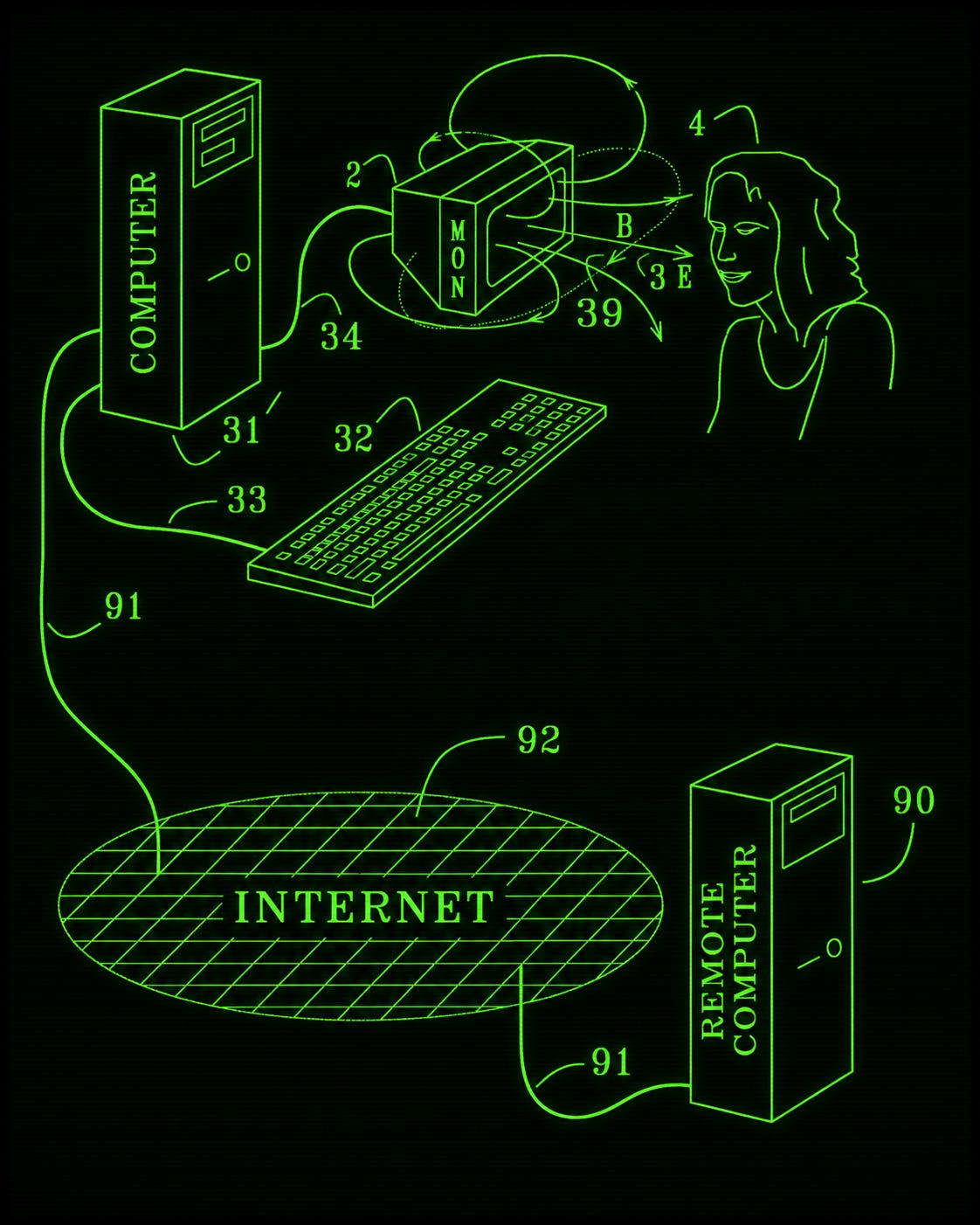
The 2003 patent - Nervous system manipulation by electromagnetic fields from monitors - details how an electromagnetic field can be pulsed through televisions, subliminally impacting the nervous system of a human subject positioned up to 11 feet away from the screen. The patent goes deep, exploring how to introduce the pulse at various stages of the media production and delivery process, and even providing the settings to do so subliminally.
Annnd down the rabbit hole we go…
The Man From Laguna Beach
Patent 6506148 belongs to one Hendricus G. Loos. The assignee line simply reads “Individual.” There’s no company, university, or defense contractor listed. Just a dude in Laguna Beach. If you go looking for him, the Internet will tell you he isn’t real.
What’s definitely real is the paper trail. Loos’s 6506148 is the last in a string of patents that sailed through the USPTO, forming a continuum examining how pulses can affect the central nervous system.
Patents 5,782,874, 5,899,922, 6,081,744, and 6,167,304 focus on pulsed electric fields. Patents 5,935,054 and 6,238,333 focus on pulsed magnetic fields, including one that works by spinning a bar magnet. Suffice it to say, Loos was pulse-maxxing OUT.
An Origin Point
Loos opens the patent by citing a long-deceased MIT mathematics professor named Norbert Wiener. Wiener’s work is foundational to what Loos was building.
In 1958, Wiener published a collection of lectures titled Nonlinear Problems in Random Theory. Wiener had been recording electroencephalograms with the physiologist Walter Rosenblith, studying the Alpha rhythm - a 10 Hz electrical burst the brain produces when you’re awake with your eyes shut. Under high resolution, the spectrum displayed an anomalous shape: a very narrow line at 10 Hz, rising not from a smooth hump but from a trench. This trench flanked the spike on both sides.
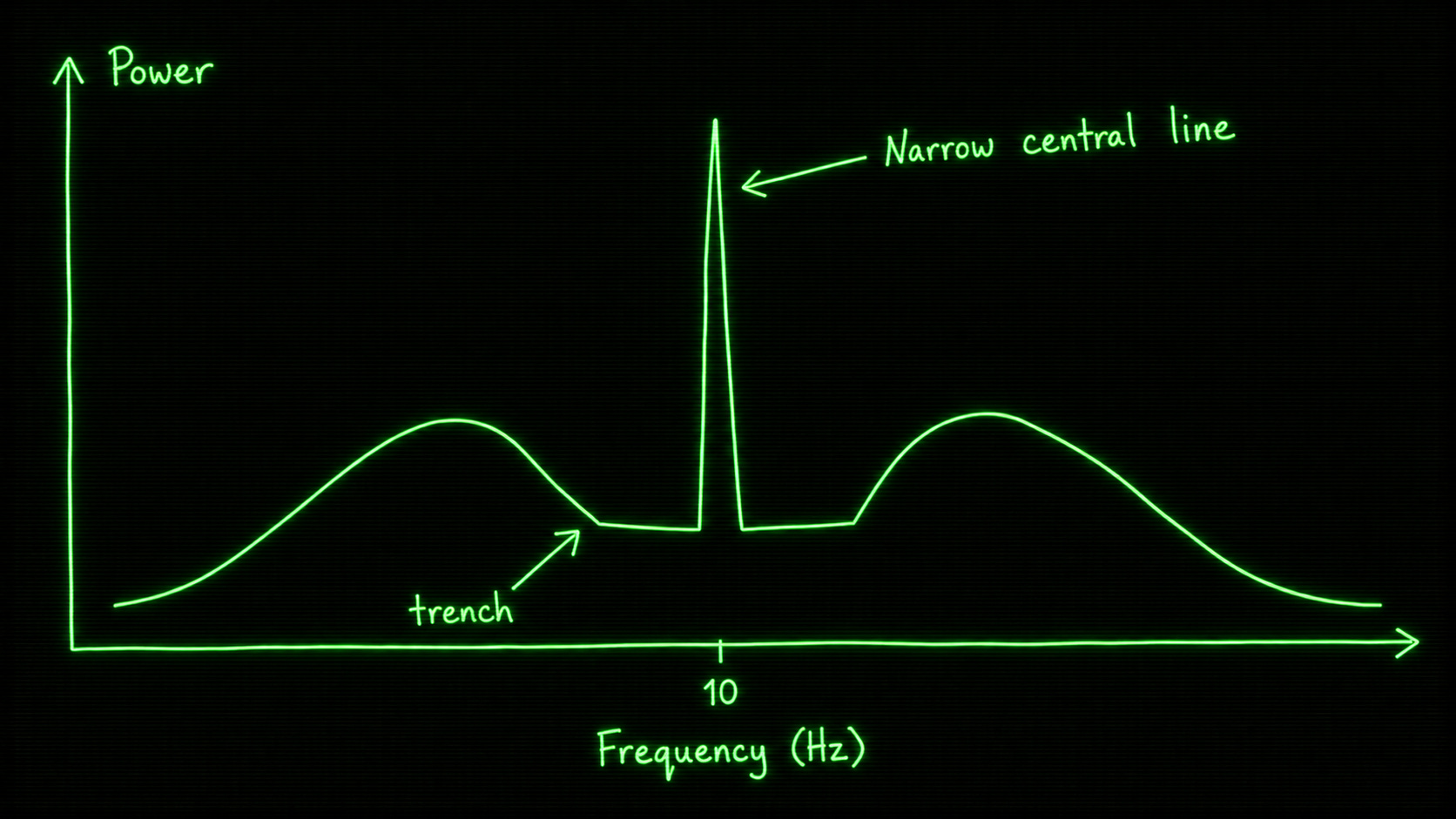
Wiener’s explanation was that the brain holds a population of oscillators with natural frequencies scattered near 10 Hz, and that they pull on each other. Run ahead of the crowd and the crowd slows you; lag and it speeds you up. The population converges into a clock more precise than any of its individual members. During the spike in the Alpha rhythm, power spread across neighboring frequencies concentrates into that central spike, leaving the trench on either side.
Wiener presumed you could impact that network of oscillators externally. To prove it, he suspended a sheet of tin from a ceiling, connected to a 400-volt, 10 Hz generator. The setup produced electrostatic induction throughout the room. He wrote that this could “drive the brain.”
Beyond producing unpleasant sensations in his subjects, Wiener never furnished much data. But the coupled-oscillator model he pioneered defined decades of innovation. It became the Kuramoto model, which is now standard math for anything that falls into step without prior explanation. This includes how fireflies flash in unison and how pacemaker cells in your heart agree on a beat. It’s oscillators all the way down baby, leaning on each other until they agree.
The “drive the brain” idea that Wiener was chipping away at had a stranger afterlife. One descendant is Michael J. W. Brennan’s patent 5,169,380 for treating sleep disorders. The innovation to induce sleep is a pair of electrodes mounted on either side of the head, a few millimeters off the skin, driven at 100+ volts somewhere between 5 and 40 Hz. The other is the Graham Potentializer. It’s a table that conducts 125 Hz. You lie on it barefoot, with your soles on a metal bar, a hemispherical metal dome hovering above your head, and get rocked like an infant.
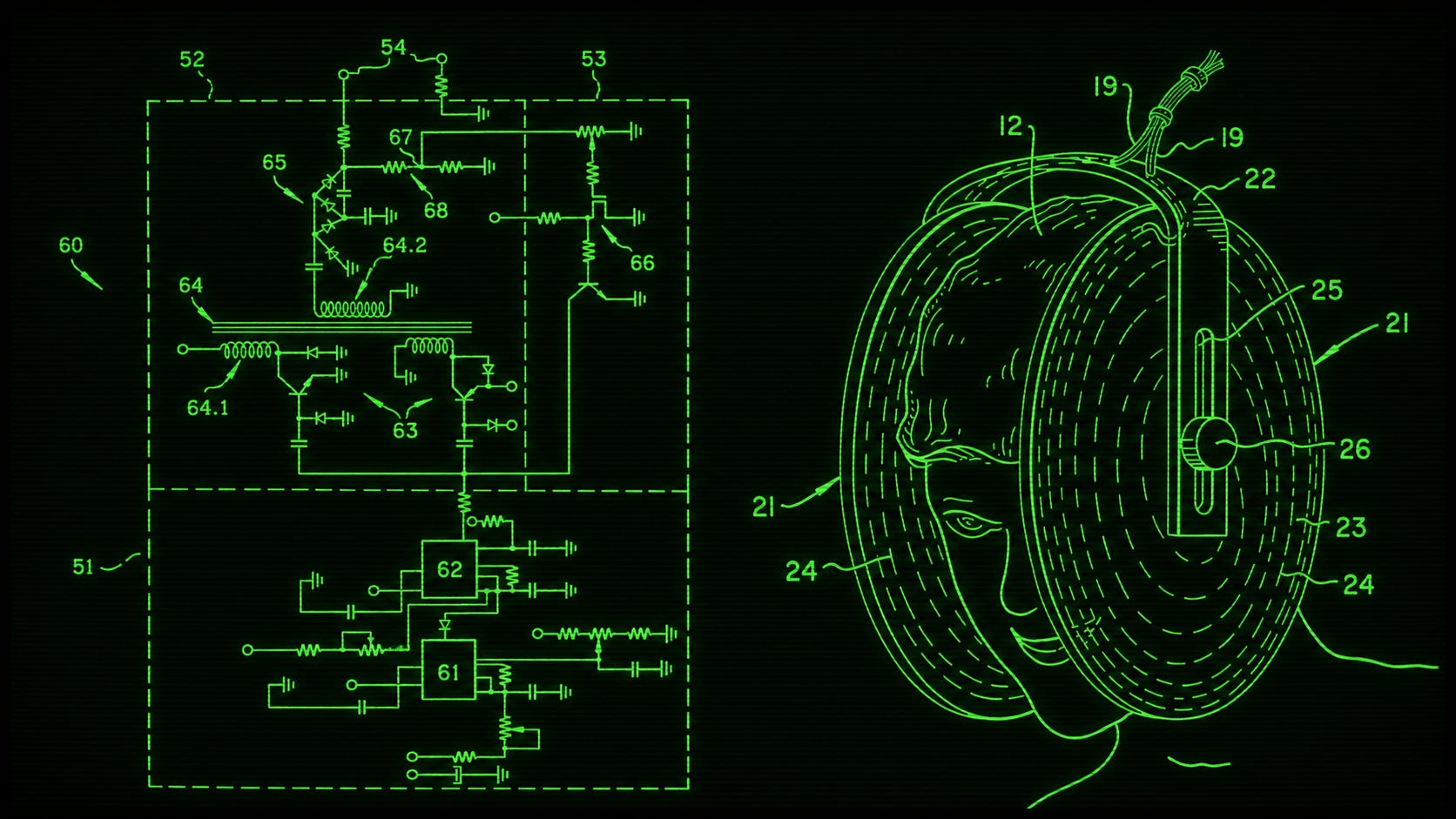
Loos was obsessed with Wiener’s tin sheet, Brennan’s electrodes, and Graham’s table. But he notes in his patent that they all aimed pulses at the head, and required a willing subject strapped to a machine. Loos saw another, sneakier way in…through the skin.
Loos had three other patents. 5,800,481 and 6,091,994 focus on gentle heat pulses on the skin. Patent 6,017,302 focuses on sound you can’t consciously hear, buried in an audio track. He was pushing for a subliminal and topical way to get to the human nervous system.
Let’s Get Topical
I have no idea what you’re doing while you read this article. You could be getting shoved into a commuter train during Japanese rush hour, or spanked with eucalyptus branches in a Russian banya. If this is the case, your skin is experiencing extreme pressure and/or heat. When this happens the nerves on your skin go crazy!
But these are extreme Substack reading conditions. More likely, you’re just sitting, reading comfortably. In this case, your skin isn’t receiving much external heat and/or pressure at all. Yet even in these chill conditions, the nerves on your skin are playing a quiet tune. Think of this ambient nerve action as low background static on an open line.
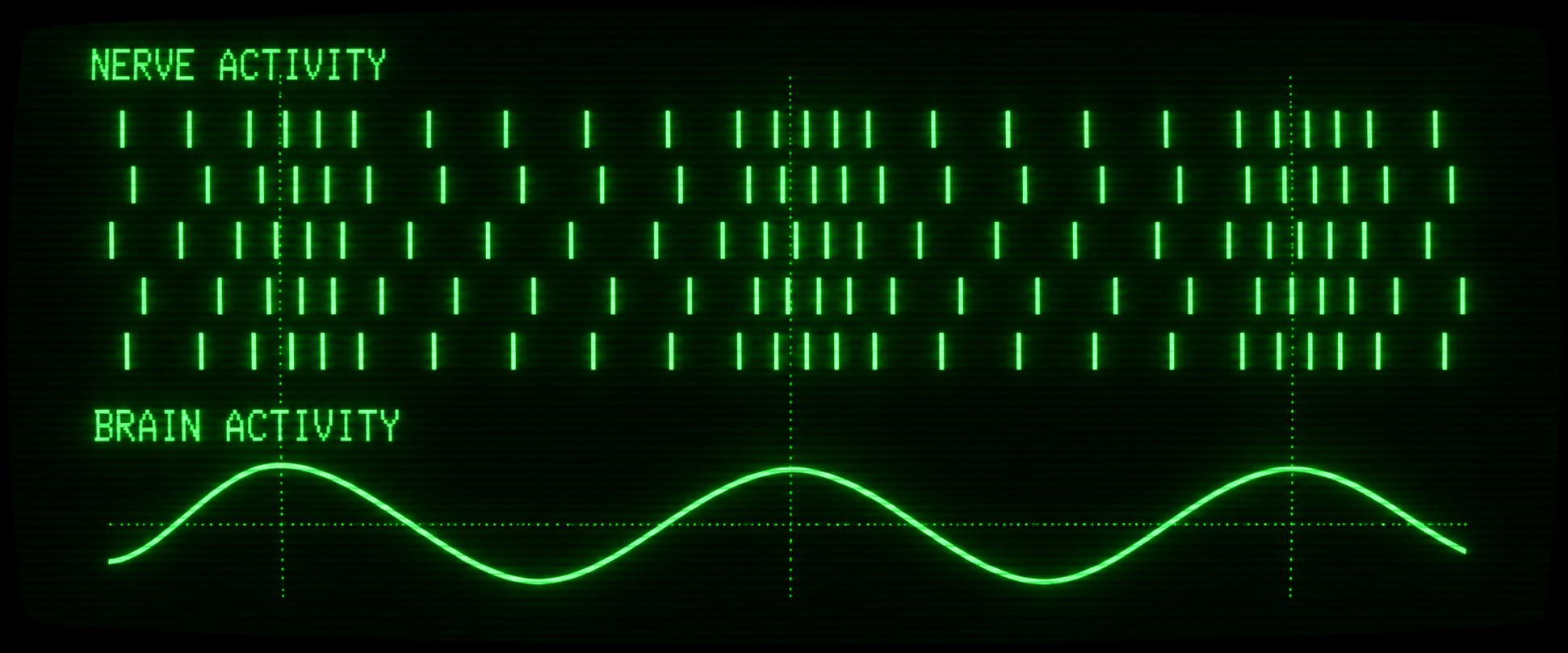
Subtle external fields cannot make your skin nerves go crazy like a Japanese crowd shover or a sadistic banya master. But a small field can change the rhythms of your ambient skin nerves. A landmark 1956 neuroscience experiment by Stephen Kuffler proved this out. In the paper, Mechanisms of activation and motor control of stretch receptors in lobster and crayfish, Kuffler showed that small fields modulate the firing of already-active stretch receptors.
As it turns out, it’s the same for us humans. A very subtle change in external field can shift the rhythm of our nerve static. That shift rides up the afferent nerves into the brain, where it’s filed under sensory information.
An external field affecting one nerve gives the brain nothing. The signal basically drowns in its own noise and fails to be registered. But spread the field across a broad patch of your skin and you’re impacting thousands of nerves with the same rhythm at the same moment in time. The change in nerve rhythm stacks and what was invisible in a single fiber becomes, in aggregate, legible to the brain.
The Patent Itself
Loos was obsessed with the impact this subtle game of vibrational telephone - between an external field, human skin nerves and brain activity - could have on humans. Specifically, he found that pulsing a very subtle .5 Hz field to the skin could induce “ptosis of the eyelids, relaxation, drowsiness, the feeling of pressure at a centered spot on the lower edge of the brow, seeing moving patterns of dark purple and greenish yellow with the eyes closed, a tonic smile, a tense feeling in the stomach, sudden loose stool, and sexual excitement.”
In the patent, Loos explores how weak that field can get while still having an impact on the nervous system. He found that a pulse amplitude of 7.9 millivolts per meter is sufficient to excite the .5 Hz resonance, provided it is spread across enough skin surface area.
This millivoltage - or lack thereof - is key. It’s so small that it falls into radio-level undetectability. To put it in perspective, the Swedish standard for monitor emissions MPR II caps extremely-low-frequency field exposure at 25 volts per meter. Loos was working roughly three thousand times below that, at a strength no regulator would ever write a rule about. And yet it still works.
The question for Loos was how to get a 7.9 millivolt field onto someone’s skin without them knowing. Conveniently for Loos, the hardware already existed. It’s called a television.
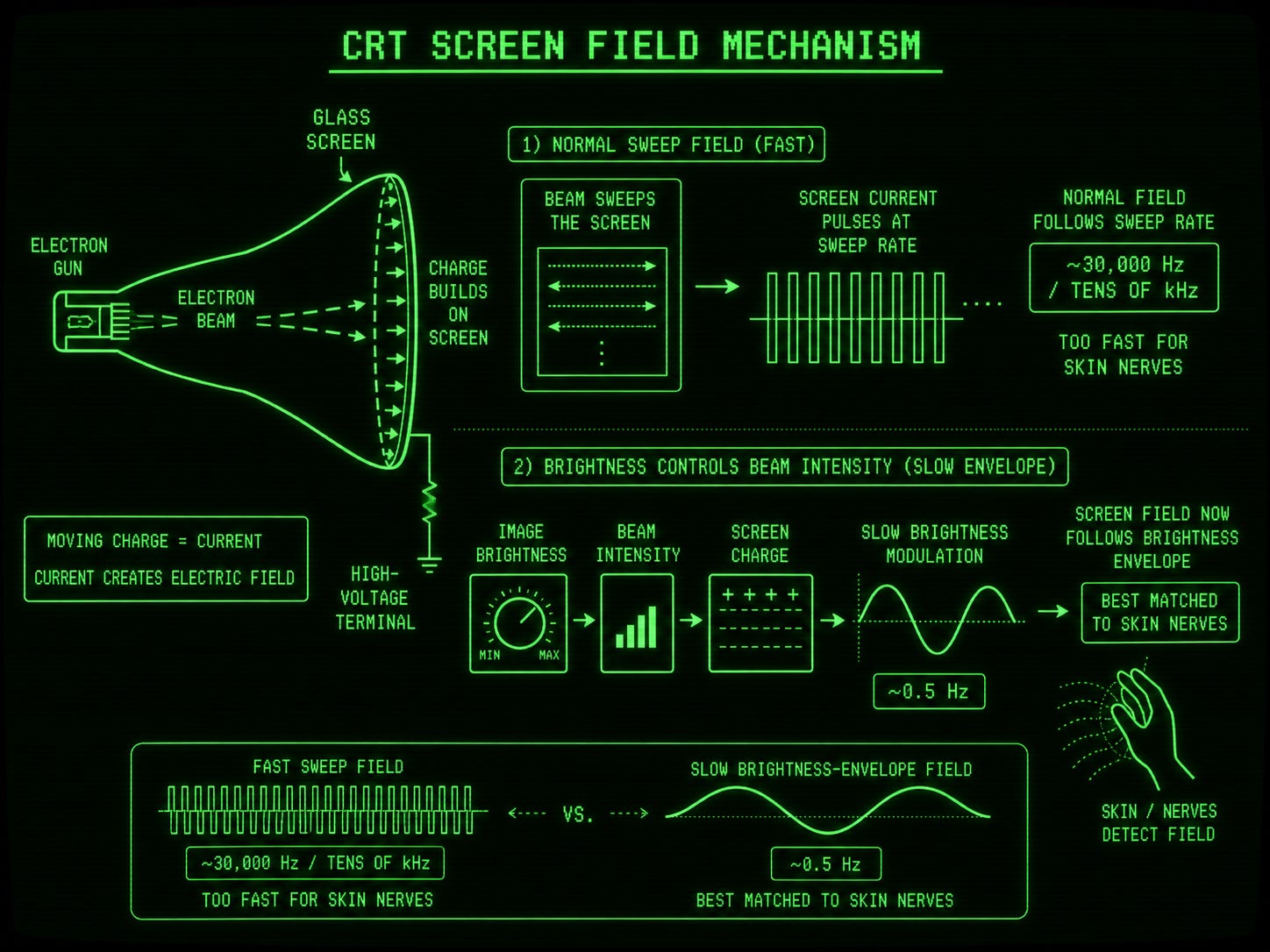
Televisions contain a cathode ray tube that makes a picture by firing electron beams at the back of the glass. These electrons pile up on the screen then drain off toward the high-voltage terminal. The movement of these electrons from one place to another is a current, and a current throws a field. Normally that field oscillates at the sweep rates - the speed at which the beam swipes across the screen. But that field oscillates at 30,000 Hz, which is far too fast to impact skin nerves. Dead end there.
But! The amount of charge sitting on that television glass at any given moment depends on how hard the beams are firing, and how hard the beams are firing depends on how bright the picture is. That brightness is in charge of, well, the charge. So if you take the overall brightness of the image and gently raise and lower it twice a second, the screen stops emitting at 30,000 Hz and starts emitting at .5 Hz, which [raises finger to sky] is the frequency the skin nerves respond to best.
Loos ran the math on a 30-inch tube pulsing its image intensity by one percent - a flicker no eye could clock. He found the field remained sufficient up to 362.9 centimeters away from the glass - almost twelve feet. “A rather large distance for viewing a 30″ TV,” he remarked.
The Hardware
The picture on your TV travels from somewhere. It could be a broadcast tower, a tape, a disc, a computer, or a camera. No matter where it came from, by the time it hits your screen it’s passed through a chain of hands.
Loos’s insight was that the brightness pulse can be introduced at any link in that chain. In his patent, he traced the chain from the screen backward. At every link in the chain, he stopped and worked out how you’d do it there.
The place you choose to cut in determines two things: how many people get hit with the frequency, and how permanent it is. Splice it into your VCR and you’ve mind-controlled exactly one living room. Pulse the lights on a soundstage during filming and every copy of that footage carries it forever.
Loos’s patent runs down the chain from closest to furthest from viewer…
The monitor. Every monitor has a brightness control, which is frequently accessible directly on the circuit board. The pulse generator Loos used for this was an Intersil ICM7555, which today costs a few cents in bulk. Loos diagrammed a pulse generator wired to that connection.
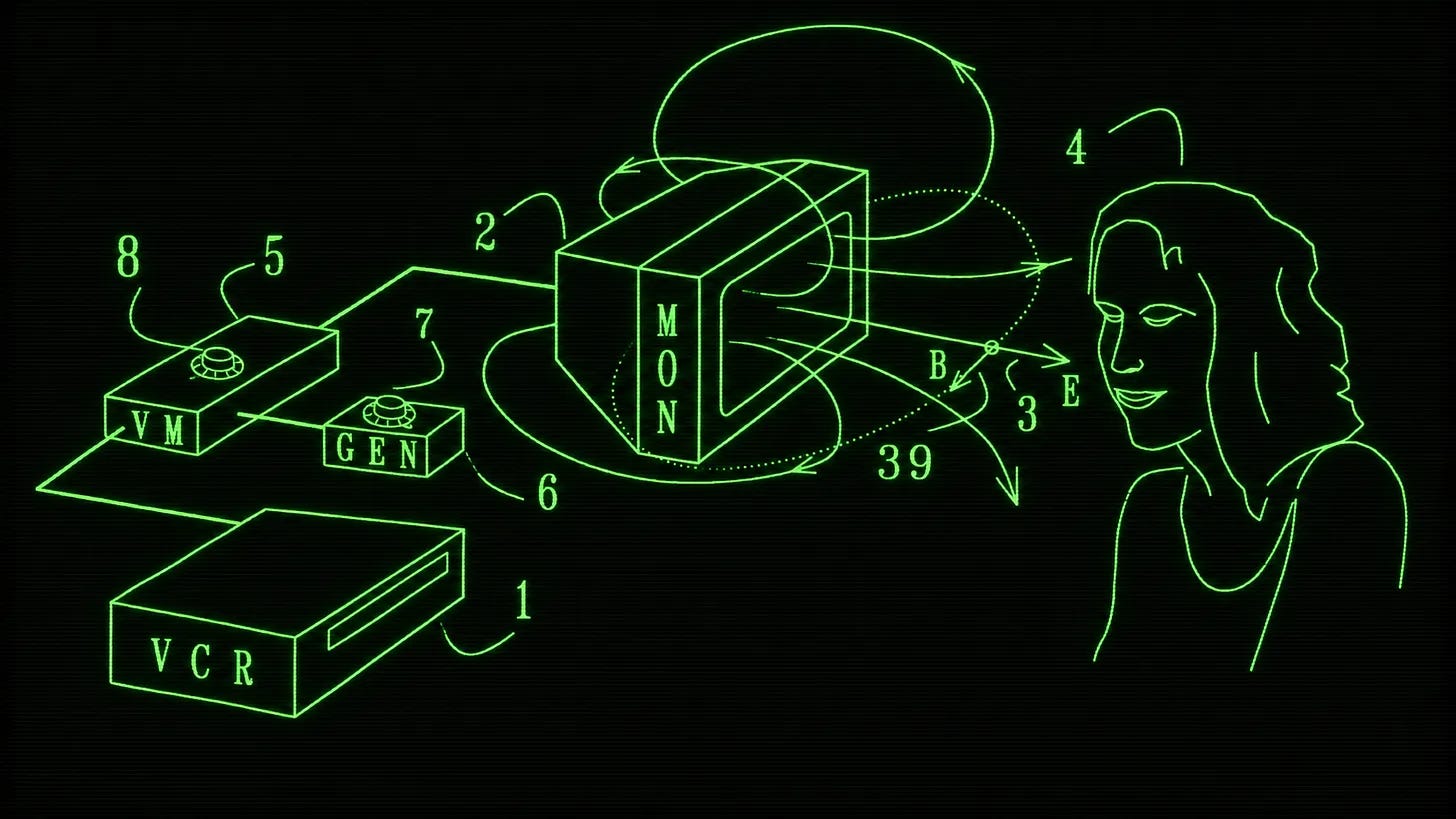
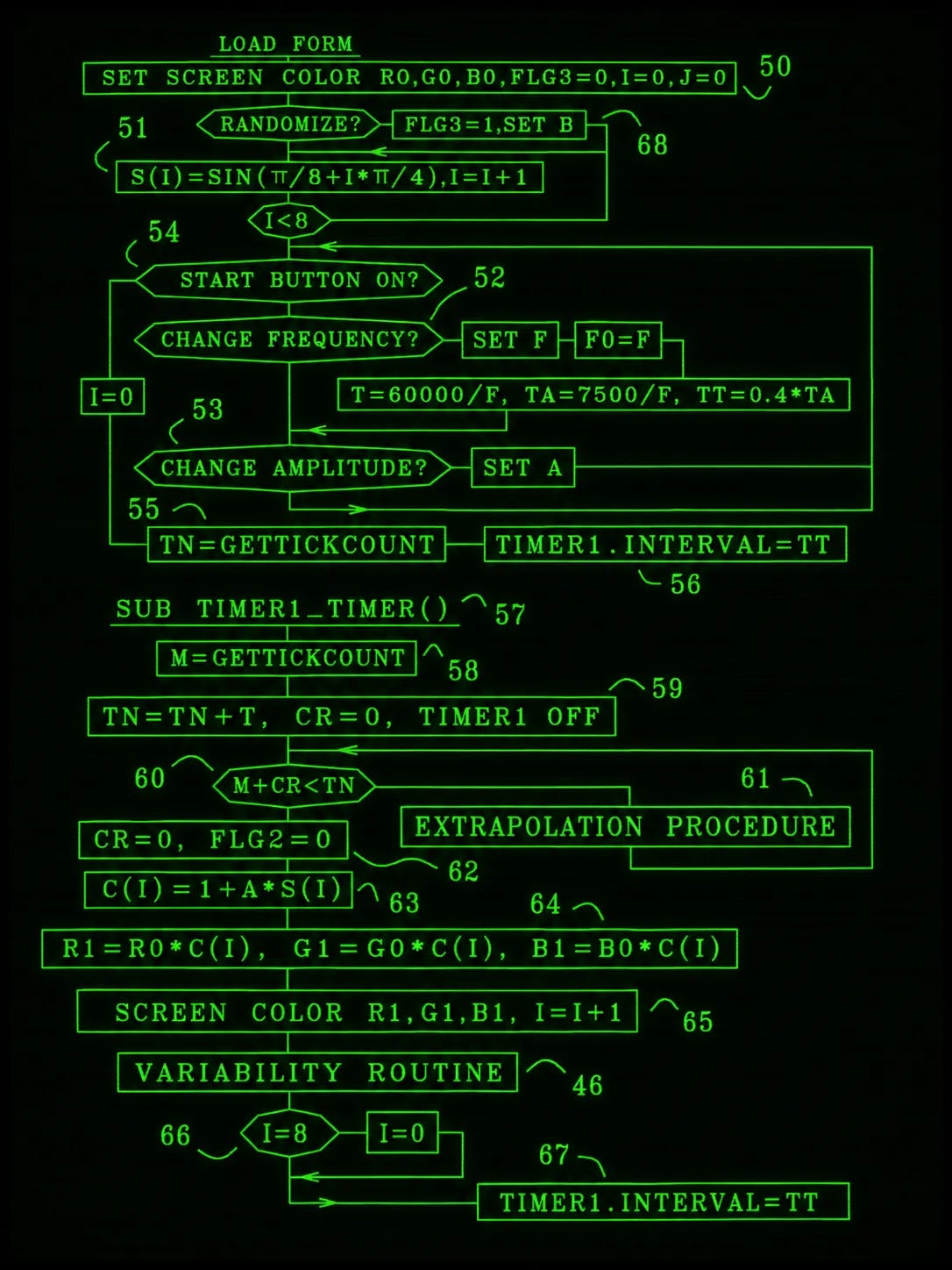
The Computer. This was Loos’s preferred method, and requires no hardware whatsoever. A Visual Basic program fills the screen with a single flat color and nudges the red, green and blue values up and down along a sine wave. The frequency and the strength are on sliders.
The Player. For a VCR or DVD player, Loos spliced a small box between the machine and the screen. It exploits a quirk of how video works: brightness rides on the overall level of the signal, while color is carried separately, by a fast wiggle whose timing sets the hue. He nudged the level gently until the brightness drifted while the color stayed exactly where it was. When nudged gently enough, the sync signals that hold the picture together don’t register the change either. What comes out is a video signal that passes every test for normal, but is actually dimming and brightening twice a second.
The Broadcast. This was Loos’s wildest method. He called it “frequency wobbling.” He inserted a device that holds the signal briefly and then releases it. The device then slowly stretches and compresses that delay. Stretching a delay while a signal is passing through smears its timing, which creates a frequency shift. And as it happens a television reads a slow frequency shift as a change in brightness.
The Recording. This involves editing the tape or the disc directly. On a DVD it’s a software edit that introduces pulses to the digital brightness values. Here’s the basic logic.
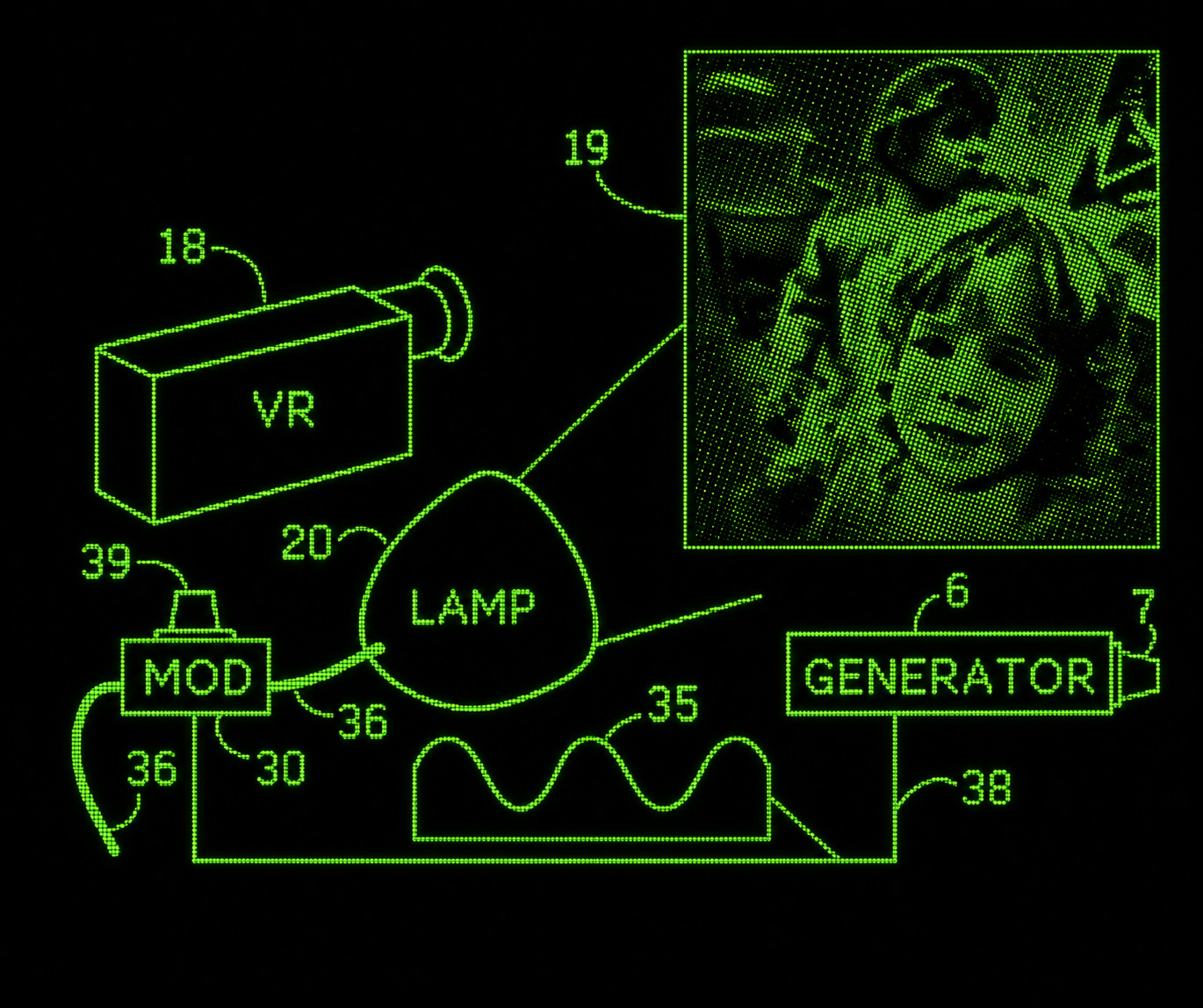
The Shoot. In this method, a film production crew could point a camera at a scene while filming, then pulse the set lights. Loos diagrammed this with a lamp, a modulator and a pulse generator. This bakes the brightness modulation into the footage at the moment of capture while remaining indistinguishable from the lighting of the scene. Every copy of the media carries the pulse thereafter.
The Remote Machine. Lastly, Loos specifies how brightness modulation can run from a computer through the Internet to a second machine’s monitor, making the pulse control entirely decentralized.
If you’re the DIY type or just hellbent on mind control, Loos even published the exact settings for subliminal image pulsing: R=71, G=71, B=233, with ΔR=ΔG=0 and ΔB=2.
Into Thin Air
Perhaps the weirdest part of the patent is that post-publication, it seems to have had exactly zero impact, on anything. Total ghost.
Loos’s Patent 6506148 was granted in January 2003 and then just sat there. Records indicate that there was no license, no productization, no company acquisition. No researcher even replicated his experiments. The patent expired on schedule in June 2021. Anybody could have built and re-patented the technology. But my research shows that nobody bothered.
This vacuous post-filing period combined with Loos’s sparse online identity puts the patent in hoax territory…until you dig a little deeper.
While a lot of conspiracy theorists insist Loos is nowhere to be found, he did in fact publish a 1959 paper in Physical Review Letters on confining plasma with a magnetic field. In 1967, he published a paper on gauge fields in the Journal of Mathematical Physics. In 1968 he pops up again as a researcher at Douglas Advanced Research Labs in Huntington Beach, where he worked on the Yang-Mills theory. This is god-level math research.
Then in September 1988, through a one-man outfit in Fallbrook called Laguna Research Laboratory, Hendricus G. Loos took a contract with the Defense Advanced Research Projects Agency (DARPA). He was placed specifically in the Aerospace Technology Office, working as Principal Investigator on Contract DAAK01-88-C-0887. The work was called “Adaptive Stochastic Content-Addressable Memory,” which is a 1988 way of saying neural networks. He then disappeared for 7 years only to pop up with his first nervous system patent in 1995.
He Wasn’t Wrong
Loos got a lot right. Screens emit low-frequency electromagnetic fields. That’s agreed-upon physics and the reason the Swedish MPR II regulatory standard exists. It’s also widely tested and confirmed that very weak fields nudge the timing of nerves that are already firing. Loos was also right that brightness modulation is invisible below about two percent.
It would seem Loos’s research failed to catch on partly due to lack of sufficient testing. In patent 6506148’s abstract, the effects were observed in only one human subject. There was no additional testing, second observer or journal. This points to a flaw in the USPTO approvals process, which evaluates whether an idea is new and non-obvious, not whether it’s true.
Perhaps the biggest brick wall Loos’s research ran into was that screens simply evolved. The mechanisms Loos built dumped charge onto glass. But the world - aka the device you’re reading this on - now uses in-plane switching displays that barely emit at all. In short, the hardware that gave his findings widespread applicability got thrown in the garbage.
Here’s the more chilling reality. We created even better mind-control technology than Loos could have dreamed of. While he was working on how to slip a half-hertz pulse past conscious awareness with a timer chip from Radio Shack, an entire Internet-based media industry was gearing up to modulate arousal, attention and mood through systems we would opt into voluntarily.
By 2012, Facebook was running its first emotional contagion experiments. For one week, the company altered the News Feeds of 689,003 users, dialing down either positive or negative emotional content and measuring what was posted afterwards. When positive expressions were reduced, people posted more negatively. When negative expressions were reduced, the reverse. The researchers themselves explained that the experiment led users to “experience the same emotions without their awareness.”
Loos spent a decade trying to push a frequency through the glass. Turns out you don’t push. You watch, and the nervous system tells you on its own.